ASSOCIATION NEWS
Jummeyyatul Huffaz Bil Filibeen President Highlights the Journey of Qur’an Dissemination in the Philippines at the World Qur’an Forum
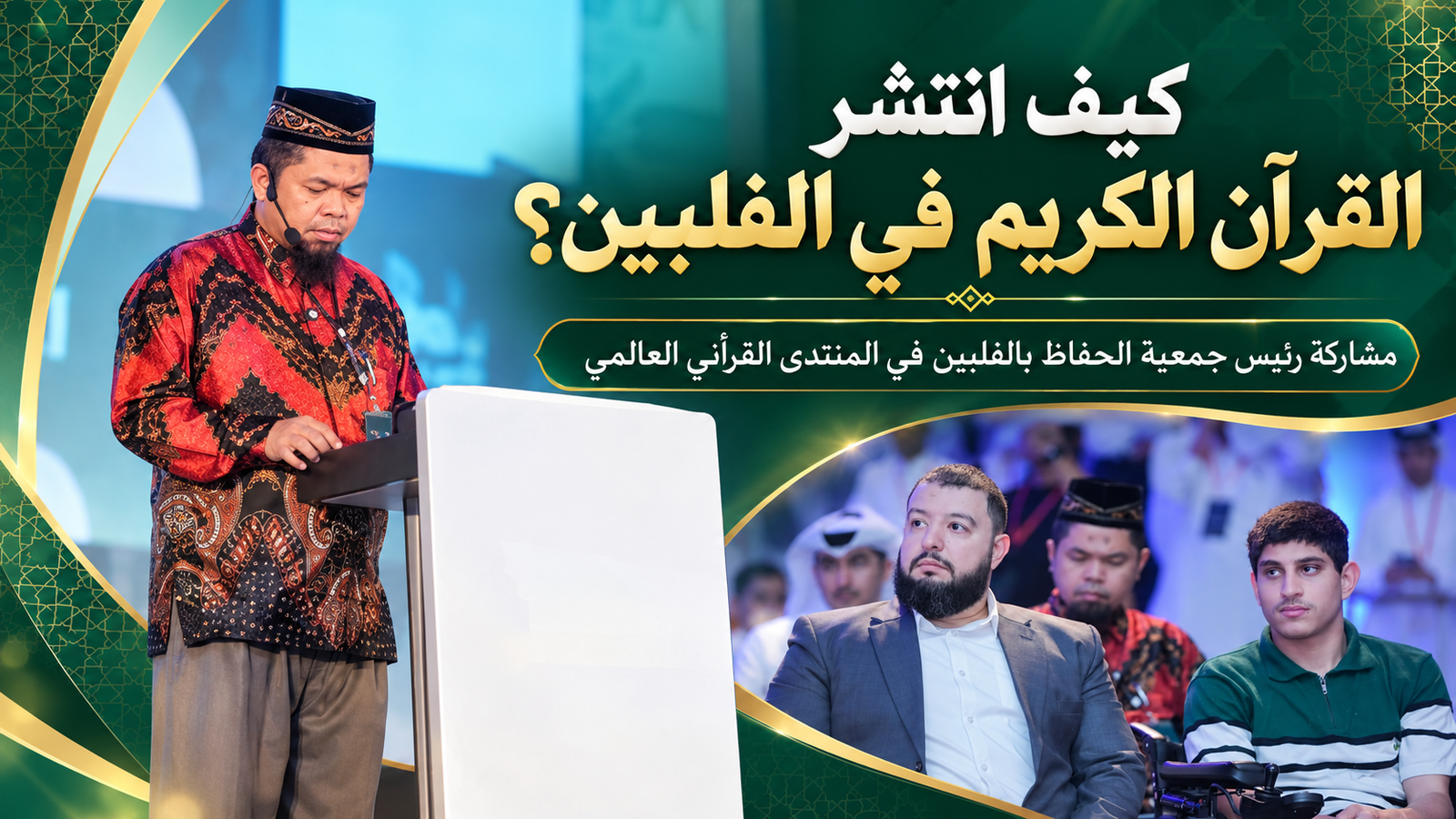
Sheikh Mas’od Muhammad Ali Lantong, President of Jummeyyatul Huffaz Bil Filibeen, participated as a speaker at the World Qur’an Forum, where he presented the history and development of Qur’anic education in the Philippines. He highlighted the role of Qur’anic initiatives and learning centers in producing memorizers, teachers, and Islamic preachers, while emphasizing the association’s commitment to localizing Qur’anic programs, expanding educational initiatives, and achieving financial self-sufficiency to ensure the sustainability of its mission.
Jummeyyatul Huffaz Bil Filibeen President Highlights the Journey of Qur’an Dissemination in the Philippines at the World Qur’an Forum
Following his participation as a speaker at the World Qur’an Forum (Aqwamiyyat al-Qur’an), Sheikh Mas’od Muhammad Ali Lantong, President of Jummeyyatul Huffaz Bil Filibeen, presented the journey of Qur’an dissemination in the Philippines, highlighting the historical development of Qur’anic education, the initiatives that have strengthened Qur’an memorization, and the institutions that have helped develop generations of Qur’an memorizers, teachers, and Islamic preachers.
In his presentation entitled “How Did the Qur’an Spread in the Philippines?”, Sheikh Mas’od discussed the major stages in the development of the Qur’anic movement in the country. He emphasized the enduring commitment of Muslim leaders to the Holy Qur’an and the significant impact of specialized Qur’anic initiatives in strengthening Islamic education and preserving the Muslim community’s religious identity.
He particularly highlighted the contributions of two important Qur’an memorization centers established through initiatives supported by the Kingdom of Saudi Arabia: the Zayd ibn Thabit Qur’an Memorization Center in Marawi City and the Ubayy ibn Ka‘b Qur’an Memorization Center in Cotabato City. These institutions played a significant role in producing generations of Qur’an memorizers, teachers, preachers, and community leaders who later contributed to the development of the Qur’anic movement in the Philippines.
Jummeyyatul Huffaz Bil Filibeen and Its Role in the Qur’anic Movement
Sheikh Mas’od explained that Jummeyyatul Huffaz Bil Filibeen was established in 1420 AH (2000 CE) by 21 Qur’an memorizers from the first and second batches of graduates of the two centers. The association emerged from these institutions with the mission of uniting Qur’an memorizers and expanding Qur’anic education throughout the country.
He presented the association’s various Qur’anic initiatives, which include Qur’an study circles, traditional Qur’anic learning centers, specialized institutes, the Qur’an Excellence Institute, the Higher Institute of Qur’an and Sunnah, and Huffaz Academic Colleges.
He also highlighted several specialized programs designed to strengthen Qur’anic learning and develop qualified teachers and reciters.
Among these is the Hifz Consolidation Program, which supports male and female memorizers after completing their memorization by helping them strengthen their retention, improve their recitation, prepare for Qur’anic certification (ijazah), and enhance their Arabic language skills.
Other initiatives include Qur’anic recitation and certification programs, as well as follow-up programs for graduates.
Reaching Approximately 15,000 Students and Graduates
One of the key points emphasized in the presentation was the growing reach of Qur’anic education in the Philippines.
According to the figures presented by Sheikh Mas’od, the association’s Qur’anic programs have reached approximately 15,000 students and graduates, including former graduates and students currently enrolled in its centers.
This figure reflects the extensive efforts undertaken to expand access to Qur’anic education and strengthen the development of Qur’an memorization programs in Bangsamoro and other parts of the Philippines.
The association also maintains dedicated divisions for male and female Qur’an memorizers, demonstrating its commitment to providing Qur’anic education and memorization opportunities for both boys and girls.
From Memorization to Community Service
Another important theme of the presentation was the transformation of Qur’anic learning into practical community service.
Rather than limiting their role to memorization and study, graduates of Qur’anic centers are encouraged to establish Qur’an study circles in mosques and gradually develop them into dedicated Qur’anic learning centers.
Through this approach, graduates become active contributors to the spread of Qur’anic education, combining the knowledge they have acquired with a commitment to teaching and serving their communities.
Sheikh Mas’od also discussed the broader educational and social benefits of Qur’anic learning, emphasizing its role in nurturing moral character, promoting moderation, strengthening peaceful coexistence, and protecting young people from drugs, extremism, and harmful behaviors.
Localizing the Qur’anic Mission and Achieving Self-Sufficiency
A central message of the presentation was the importance of localizing the Qur’anic movement and building sustainable institutions.
Sheikh Mas’od emphasized two major responsibilities of the association: activating its local branches so that they become active partners in the Qur’anic mission, and developing a self-sustaining model that reduces dependence on external assistance.
This vision reflects the association’s commitment to building a strong institutional foundation capable of sustaining Qur’anic education, expanding its programs, and serving future generations.
Financial self-sufficiency, in this context, is not simply an economic objective. It is a strategic means of ensuring the continuity of the association’s Qur’anic mission and strengthening its long-term impact on society.
Bringing the Philippine Qur’anic Experience to the International Stage
The participation of Sheikh Mas’od at the World Qur’an Forum provided an opportunity to present the Philippine experience in Qur’anic education to an international audience and highlight the contributions of local institutions to the preservation, teaching, and dissemination of the Holy Qur’an.
His presentation demonstrated how a movement that began with a small group of 21 memorizers developed into a broader institutional effort involving educational programs, Qur’anic centers, teacher development, and community engagement.
The experience of Jummeyyatul Huffaz Bil Filibeen illustrates the importance of combining sincere commitment to the Qur’an with organized educational initiatives, effective institutional leadership, and sustainable development strategies.
Through its continuing efforts, the association seeks to expand Qur’anic education, strengthen its network of institutions, and ensure that the teachings of the Holy Qur’an continue to guide and benefit communities throughout Bangsamoro and the Philippines.
The story of the Qur’an in the Philippines is a journey that began with love for the Holy Book, grew through education and institutional support, and continues today through generations of memorizers, teachers, and dedicated servants of the Qur’an—striving toward greater self-sufficiency and a sustainable Qur’anic future.
From Love for the Qur’an to a Sustainable Qur’anic Movement
The central message of Sheikh Mas’od’s presentation is that the spread of the Holy Qur’an in the Philippines has developed through several interconnected stages:
Love and Commitment to the Qur’an — Muslim leaders and communities preserved their connection to the Holy Book and maintained its place in their religious identity.
Institutional Support and Qur’anic Education — Specialized memorization centers helped develop generations of Qur’an memorizers, teachers, and Islamic preachers.
Community-Based Qur’anic Initiatives — Graduates carried their knowledge into communities by establishing study circles and Qur’anic learning centers.
Expansion and Institutional Development — Jummeyyatul Huffaz Bil Filibeen developed programs and institutions to serve thousands of students and graduates.
Localization and Financial Self-Sufficiency — The association continues to pursue a sustainable model that strengthens local participation and reduces dependence on external assistance.
The ultimate vision is to build a self-sustaining Qur’anic movement in the Philippines—one that continues to teach, preserve, and spread the Holy Qur’an for generations to come.
More Photos
Additional photos from this story and the association.